Oud Fragrances for Men: What You Are Actually Smelling
Most oud explainers only reference rare luxury natural oud. We break down the unlisted synthetic and blend notes in mass-market men's oud fragrances brands hide.

Nearly all mass market men's oud fragrances do not contain the rare, natural agarwood oud featured in high-end marketing copy. This guide breaks down the common unlisted synthetic and blended notes you will encounter when shopping for an oud scent. It also helps you spot the difference between a formula that delivers the classic smoky, woody oud profile and a generic amber knockoff with no real oud character.
Some links on this page may earn us a commission. It does not affect which products we recommend or how we rank them.
If you have browsed men’s fragrance shelves in the last few years, you have seen oud everywhere. Every major mass market brand, every discount fragrance line, and every indie clone house has at least one bottle with “oud” printed in large lettering on the front, paired with marketing copy that talks about rare, wild agarwood, centuries-old distillation traditions, and exotic Southeast Asian forests. The problem is, almost none of those bottles actually contain the natural oud that marketing describes. Virtually every mainstream oud explainer you will find online focuses exclusively on that ultra-rare luxury natural oud, treating it as the only “real” version of the scent and framing every mass market release as a cheap, unworthy imitation. That does a huge disservice to regular shoppers who are not looking to drop luxury tier money on a niche hard-to-find scent, and who just want to know what they are actually getting when they pick up a bottle labeled oud at their local department store or online shop. This guide skips the mythmaking around rare natural oud entirely, and breaks down the actual unlisted notes, common blends, and hidden tradeoffs that define the overwhelming majority of the men’s oud fragrances you can buy right now. We will also walk through the very real community disagreement around budget oud quality, and give you a clear framework to pick a bottle that matches the profile you want, instead of falling for generic amber filler.
The Unspoken Gap Between Oud Marketing And Reality
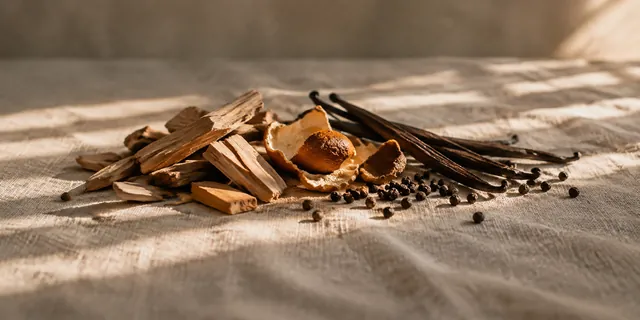
Natural oud is a resin that forms in the heartwood of agarwood trees after they are infected with a specific type of mold. It takes years for the resin to develop, and wild, properly aged oud is so scarce that it has been traded as a luxury good for most of human history. That scarcity is why brands love to reference it in their marketing: it adds instant prestige to any bottle, no matter what is actually inside. What brands almost never tell you is that the vast majority of mass market oud fragrances do not contain any natural agarwood resin at all. Even many mid-tier and premium designer oud releases rely entirely on lab-created synthetic molecules to replicate the core scent traits people associate with oud, because those synthetics are far more consistent, far less expensive to source, and far easier to standardize across large production runs. That is not inherently a bad thing. Many synthetic oud molecules are carefully formulated to capture the exact smoky, woody, slightly animalic depth that people seek out in oud, and many shoppers actually prefer the more predictable profile of a well-blended synthetic oud over the highly variable, sometimes overwhelming profile of natural oud. The problem is that brands almost never list these synthetic ingredients on their public note breakdowns. Instead, they will list “oud” as a single vague top, heart, or base note, and leave out all the other supporting synthetic and blended ingredients that make up the vast majority of the scent in the bottle.
The Most Common Unlisted Notes In Mass Market Oud
After sorting through community discussions about accessible oud releases, three unlisted components show up again and again in the formulas people actually buy: First, there are the dedicated synthetic oud molecules. These are lab-created compounds designed to hit the specific sharp, smoky, woody core that people recognize as oud. Different manufacturers use different variations of these molecules, and the quality varies wildly. Higher quality versions capture the dark, almost charred wood edge that defines a good oud, while lower quality versions can come off as harsh, acrid, or even plasticky if they are not blended carefully. Second, there is the ubiquitous synthetic amber base. This is the single most common filler in mass market oud releases, and the root of almost all the frustration people have with bad oud purchases. Synthetic amber is a warm, sweet, slightly resinous lab-made note that is extremely cheap to produce, and it can be used to bulk up the volume of a fragrance formula without adding any actual oud character. Many budget oud bottles are made up almost entirely of generic synthetic amber, with only a tiny trace of any oud-related molecule added just so the brand can legally put “oud” on the label. Third, there are hidden leather and suede accords. Many of the most well-liked accessible oud releases add unlisted synthetic leather or suede notes to the blend, to give the scent a richer, softer, more rounded depth that balances out the sharp smokiness of the core oud molecule. Brands almost never mention these notes on their packaging, because they want the entire narrative of the bottle to center on the single prestige ingredient: oud. But for many shoppers, that subtle, unlisted leathery edge is the difference between an oud that feels rich and full, and one that feels thin and one-note.
Why The Community Is So Divided Over Budget Oud
If you have ever browsed fragrance forums for recommendations for your first oud, you have almost certainly seen the sharp split in opinions that defines every discussion of affordable oud options. One group of shoppers will insist that you can find excellent, fully realized oud profiles at accessible price points, that hit every single trait you are looking for: warm, dark, smoky, woody, leathery, and rich with supporting amber layers. The other group will insist that every single low-cost oud release is a total scam, and that every bottle they have ever tried in that category just smells like generic synthetic amber with no recognizable oud character at all. This split is not a matter of different skin chemistry or personal preference, as many people assume. It is a direct result of how opaque brands are about their formulas. The two groups of people are not even smelling the same category of product, even though every bottle they are testing has the word “oud” printed on the label.
| Scent Profile Trait | What the "great budget oud" camp reports | What the "just generic amber" camp reports |
|---|---|---|
| Core scent character | Balanced mix of smoky wood, soft leather, and warm amber | Dominated entirely by sweet, resinous amber with no sharp woody edge |
| Smokiness | Noticeable dark, charred wood edge that cuts through the sweetness of the amber | No smokiness at all, no hint of wood or leather |
| Wear progression | Develops richer, deeper leather and wood notes the longer it sits on skin | Stays almost exactly the same from first spray to dry down |
| Overall impression | Feels like a distinct, dedicated oud fragrance | Feels like a generic mass market amber scent with a single oud molecule added in trace amounts |
What the first group of shoppers found was a release that had a high enough concentration of quality synthetic oud molecules, plus that hidden leather accord, to deliver the full expected oud profile. What the second group of shoppers found was a release that cut almost all of the oud-related ingredients out of the formula entirely, and relied on cheap generic amber to do all the work. This divide gets even more confusing when you factor in the number of mass market oud releases that are explicitly formulated to match the DNA of popular luxury amber-forward scents that only have a tiny hint of oud in their original formula. Many of these releases are marketed as oud fragrances, but their core design goal is to replicate the exact profile of that well-known non-oud luxury scent, not to deliver the traditional smoky, woody oud profile most shoppers are looking for. If you buy one of those bottles expecting a classic oud, you will end up in the second, frustrated camp that thinks all affordable oud is just generic amber.
How To Shop For Oud Without Falling For Marketing Fluff
You do not need to spend luxury tier money to get a men’s oud fragrance that delivers the exact smoky, woody, leathery profile you want. But you also cannot trust the note list printed on the bottle, or the marketing copy from the brand, to tell you what is actually inside. Use this simple, community-backed framework to avoid the generic amber duds and find a bottle that works for you: First, ignore the official brand note breakdown entirely. As we covered earlier, these lists are almost always incomplete, and designed to highlight prestige ingredients like oud while omitting all the filler and supporting notes that make up most of the scent. A long list of fancy sounding rare ingredients on the box does not mean the bottle contains any meaningful amount of any of them. Second, when you are browsing community recommendations, skip past any discussion that only talks about a fragrance being a good clone of a popular non-oud luxury amber scent. Those releases are almost always going to lean far more heavily on that generic amber base, and will not deliver the distinct smoky wood profile that most people shopping for oud are looking for. Instead, prioritize discussions where people explicitly reference the specific traits you want: smokiness, dark wood, leathery depth, and rich amber backing. If multiple people mention those specific traits, that is a strong sign the formula has enough actual oud-related material in it to deliver on the promise of the label. Third, if you are experimenting with oud for the first time, do not lock yourself into buying a full bottle of any release you have not seen multiple independent community members describe as matching the exact profile you want. There is no reason to waste money on a bottle that turns out to be nothing but sweet amber, when a little bit of targeted research will point you toward options that actually deliver the distinct, rich oud character you are looking for. At the end of the day, oud is no different than any other fragrance category: the best options are not the ones with the most over-the-top marketing copy, or the fanciest origin story printed on the box. They are the ones that balance their core oud notes with the right supporting accords to create a scent that feels intentional, distinct, and true to the profile you actually want to wear.
Related reading
 Scent ProfilesWoody Fragrances for Men: Dry, Creamy, and Smoky ExplainedThis no-fluff buying guide for men’s woody fragrances breaks down 3 distinct no-sweetness profiles, plus how to choose between premium and budget picks for your2026-09-20 · 7 min read
 Scent ProfilesAmber Fragrances for Men: Warm, Resinous, and Easy to OverdoOur no-fluff buying guide to men's amber fragrances breaks down community debates, blind buy pitfalls, and tips to avoid overapplying these rich, warm scents.2026-09-20 · 7 min read
- Scent ProfilesBlue Fragrances Explained: Why Everyone Wears One, And The Hidden TradeoffsWe break down the real community debate over mainstream blue fragrances like Versace Dylan Blue, comparable alternatives, and the longevity claims brands never2026-10-06 · 8 min read
- Scent ProfilesFresh Clean Fragrances: The Everyday Smell That Never OverstaysWe curated under-the-radar fresh clean fragrances that skip generic soap and laundry detergent notes, perfect for low-key everyday and office wear.2026-10-02 · 6 min read