Men's Skincare Routine Order: What Goes On First and Why
This no-fluff guide breaks down flexible skincare layering order for new users, plus targeted tweaks for stubborn back acne most mainstream guides skip.

This guide lays out a flexible, no-fluff men's skincare routine order that works for total beginners, no fancy products required. It includes targeted layering tweaks specifically for people dealing with stubborn back or unexpected post-travel acne flareups that most generic guides ignore. You do not need to follow a strict 10-step process to see results, and can adjust steps based on how much time you have each day.
Some links on this page may earn us a commission. It does not affect which products we recommend or how we rank them.
Nearly every mainstream men’s skincare guide serves up a strict, non-negotiable step order that treats all skin the exact same way. That advice falls apart for two huge groups of people the guides almost never acknowledge: total beginners who don’t want to buy a shelf full of products, and people building routines to help themselves or a partner get persistent, severe back acne under control.
This guide skips the arbitrary rules. It’s built entirely from real community discussion around what actually works for regular people, not beauty influencers with 20-step routines. We start with the universal base order that works for almost every skin type, then break down the very real community disagreement around back acne layering that no generic guide will tell you about, so you can pick the order that fits your skin specifically.
The Core Default Skincare Routine Order For Beginners
The only non-negotiable rule that every part of the community agrees on is that you apply products from thinnest to thickest. Thin, watery treatments can’t penetrate through thick, creamy moisturizer, so putting them on first ensures they actually reach your skin instead of sitting on top of a layer of product you applied earlier. This base framework is simple enough for someone who has never used a skincare product outside of basic bar soap, and you can add or remove steps as you go.
Daytime Base Routine (4 Steps Max)
You don’t need 7 different products for a functional daytime routine. Stick to this order, and skip any step you don’t have a product for:
- Cleanser first: You can’t apply any other product to dirty, sweat-covered skin, so this is always step one. Use a gentle, non-foaming cleanser if you can, but even a basic drugstore cleanser will work fine if that’s what you have on hand.
- Thin toners or mists next: If you use a hydrating toner or facial mist, this is where it goes. It’s thin enough to absorb quickly right after cleansing, before you add anything heavier.
- Active treatments before sealing products: Vitamin C serums, spot treatments, or any other targeted treatment goes on here, before moisturizer locks it in.
- Moisturizer, then sunscreen last: Moisturizer locks in all the previous products, and sunscreen is the final step to create a protective top layer that blocks UV damage. There is no valid reason to apply sunscreen before moisturizer, as it will not sit evenly on your skin.
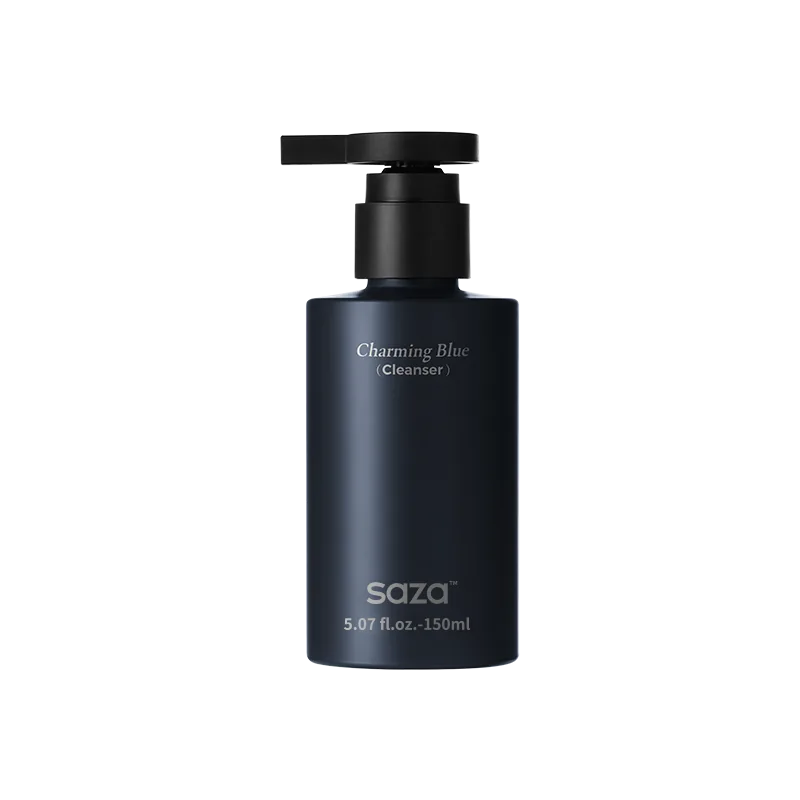 Charming Blue CleanserView on sazalab.com →
Nighttime Base Routine
Nighttime is when your skin repairs itself, so you can add extra treatment steps here without the need for sunscreen at the end:
- Cleanse first, double cleanse if needed: If you wore heavy sunscreen, spent all day sweating outside, or have a layer of grime built up, you can wash your face twice to make sure all residue is gone. If your skin feels clean after one wash, there’s no need for a second.
- Exfoliant, 2-3 times a week only: Never use a physical or chemical exfoliant every single day, no matter how oily your skin is. Apply it after cleansing, on completely dry skin, to avoid unnecessary irritation.
- Nighttime actives next: Retinol, acne serums, or any other strong treatment that you only use at night goes on here.
- Thick moisturizer or face oil last: This seals in all your nighttime treatments, and keeps your skin from drying out while you sleep.
The Big Community Disagreement: Layering Order For Back Acne Flareups
For basic facial skincare, most of the community lines up behind the thin-to-thick base order above. But when it comes to severe, stubborn back acne that won’t clear no matter what you try, there is zero universal consensus. The two camps have very different, well-supported arguments for their preferred layering order, and neither side is right for every person.
| Camp 1: Actives First | Camp 2: Moisturizer First (Skin Barrier Sandwich) | |
|---|---|---|
| Core Argument | Acne actives need direct contact with clean, bare skin to penetrate deep into the thick pores on the back, where most deep cystic pimples form. Any layer of moisturizer before the active will block it from reaching the source of the breakout. | Putting moisturizer first creates a gentle protective buffer that stops strong acne actives from damaging the top layer of your skin. A broken, irritated skin barrier is one of the biggest hidden causes of persistent back acne that won’t clear, even if you use the right active ingredients. |
| Who This Works Best For | People with very oily, thick back skin who do not get red, flaky, or irritated easily. This is also a good fit for people who have used acne actives consistently before with no negative side effects. | People with sensitive skin, or people who already tried applying actives first and ended up with dry, peeling patches that made their breakouts spread to new areas of the back. |
| Common Reported Downsides | High risk of over-irritation if you use actives too often, which can lead to more widespread breakouts across the back instead of clearing existing ones. | Some users report their acne actives feel less potent with the moisturizer buffer, so it can take longer to see visible results. |
How To Pick Which Order Works For You (No Guesswork)
The vast majority of users in the discussion threads agree that you don’t have to pick one side permanently. The simplest, lowest-risk test you can run is to use one layering method on one half of your back, and the other method on the other half, for a few weeks. You will be able to see very clearly which side has fewer new breakouts, less irritation, and clearer skin, and you can stick with that order long term.
This test works because no one can tell you ahead of time how your unique skin will react. A layering order that clears one person’s back acne in a few weeks can leave another person with a raw, irritated back that breaks out worse than it did before.
Adjusting The Base Routine For Common Scenarios Mainstream Guides Ignore
Most generic skincare routine order guides are written for people who are already obsessed with skincare, and have no problem following 6+ steps every single day. The community discussions are full of tweaks for the far more common real-world scenarios those guides never cover.
Routine For Someone Who Hates Fuss (Building For A Partner)
A huge number of people search for these routine guides because their partner has severe back acne, but refuses to follow a complicated multi-step routine that takes 10 minutes every shower. The most successful routines shared in the threads cut all unnecessary steps down to a 4-step flow that almost anyone will stick to:
- Wash your back with a gentle, non-scented cleanser in the shower, no harsh scrubs required.
- Pat your back completely dry with a clean towel before you step out of the shower.
- Swipe a pre-medicated acne wipe across all the affected areas.
- Slather on a lightweight, non-greasy body moisturizer.
The biggest mistake people make when building a routine for a partner is adding too many extra steps. If the routine feels like a chore, the person using it will stop doing it after a few days, no matter how effective the ingredients are.
Post-Travel Breakout Adjustments
A lot of people get random, unexpected breakouts on their cheeks and jawline right after they get home from a trip, even if their normal routine works perfectly for them at home. The small layering order tweak that most users recommend for this scenario is to skip all exfoliants and strong actives for a few days after you return home. Instead of applying spot treatments right after cleansing, layer moisturizer first, then apply your spot treatment on top of it.
This small order change repairs the damaged skin barrier that gets worn down by dry plane air, different mineral content in hotel water, and extra time spent in the sun. Many users report that this simple adjustment stops those small post-travel breakouts from turning into full, multi-week flareups that are hard to clear.
Common Layering Mistakes That Waste Product And Make Acne Worse
These small, easy to fix mistakes show up over and over again in community discussions, and they can completely derail even the most well-planned routine:
- Skipping the dry time between steps: A lot of guys slather the next product on immediately after the last one, before it has absorbed fully. This dilutes every product you apply, and makes them far less effective. Wait a minute or two between each step, until your skin no longer feels sticky, before you move on.
- Applying actives on top of thick body butter: Thick, heavy body butter creates a complete seal over your skin that no acne active can penetrate. You are wasting all of the active product if you put it on top of a layer of butter, and you will see zero improvement in your breakouts.
- Leaving your skin damp before applying treatment: If you step out of the shower and immediately swipe an acne wipe across your soaking wet back, the water dilutes the active ingredient so much that it barely does anything. Patting your skin completely dry first makes the treatment work far better, with no extra effort.
At the end of the day, the best men’s skincare routine order is not a strict, unbreakable list you have to follow to the letter. It’s a flexible framework you can adjust to fit your skin type, how much time you have, and what specific issues you are trying to solve. The community disagreement over back acne layering is not a sign that no one knows what they are talking about — it’s a reminder that skin is deeply individual, and the most effective routine is always the one you can stick to consistently, without irritating your unique skin.
Related reading
 Daily CareHow to Stop Body Odor: The Parts Most People SkipSkip generic deodorant hacks. This guide covers under-cited non-antiperspirant fixes for body odor from diet, laundry, groin care and more that top results leave2026-09-20 · 7 min read
 Daily CareBody Wash for Acne-Prone Skin Men: What to Look For, What to AvoidWe cross-reference two top skincare community threads to break down what works for men’s acne-prone skin, what to skip, and which products lack verified anecdotes.2026-09-20 · 8 min read
 Daily CareShampoos for Oily Hair: Why Washing More Often Is Not the AnswerSkip generic ranked lists. We break down why over-washing oily hair backfires, plus targeted guidance for your specific hair and scalp type.2026-09-20 · 7 min read
 Daily CareBest Face Washes for Oily Skin Men: US-Retail Options With Ingredients That MatterWe cut through search results flooded with regional South Asian products to show you how to pick the best US-retail face wash for men with oily skin, no unvetted2026-09-20 · 6 min read