Work Fragrance: A Practical Guide For Every Type Of Work Environment
Stop wasting money on scents that are too strong for the office or too faint for manual labor. This guide breaks down picks for your exact work role, no generic
Nearly all generic work fragrance guides push the same subtle picks for every job, which leaves people in manual labor roles stuck with scents that fade far too fast. This guide splits recommendations for quiet shared offices and hands-on, non-indoor work roles so you pick something that fits your exact space. You won’t have to stress about bothering coworkers or reapplying constantly through your shift.
Some links on this page may earn us a commission. It does not affect which products we recommend or how we rank them.
If you’ve ever searched for work fragrance advice before, you’ve probably noticed the same pattern across almost every guide: every list pushes the same set of ultra-subtle, low-profile scents, with zero consideration for what your actual job looks like. That works fine if you sit at a desk in a quiet open-concept office for your whole shift, but it is a useless framework if you work in a warehouse, on a construction site, on a production line, or any other role that keeps you moving, exposed to heavy ventilation, or far from other people for most of the day.
This gap is not a small oversight. It is the root of the huge, unspoken disagreement that runs through every community thread about work fragrance picks, where two groups of shoppers with completely opposite needs end up arguing that the other side’s recommended scents are either rude or a total waste of money. This guide does not pick a side in that fight. It gives you the framework to figure out which camp you fall into, what to look for in a scent that fits your exact work context, and what red flags to avoid no matter where you work.
The Core Divide: No Single Work Fragrance Works For Every Job
The community split over work fragrance strength is not a matter of personal preference, it is a matter of context. People who spend their days in small, shared indoor spaces have to navigate unwritten social rules that prioritize not imposing on other people’s personal space, plus formal fragrance-free work policies that many offices now put in place to accommodate coworkers with allergies, asthma, or scent sensitivities. For these shoppers, the ideal work fragrance is one that you can barely detect on yourself after you leave the house, and that no one else in your meeting room will notice unless they are standing right next to you.
For people in manual, industrial, or outdoor roles, that level of subtlety is a non-starter. When you are moving around through your shift, exposed to constant heavy air flow, and working up a light sweat, those ultra-subtle office scents vanish almost entirely very soon after you apply them. You end up with no scent at all for the rest of your shift, which defeats the whole point of wearing fragrance in the first place. The mistake almost every generic guide makes is treating the office group’s priorities as the universal standard for all work fragrance, which leaves a huge chunk of shoppers with recommendations that do not work for their lives at all.
To make this distinction clear, we’ve laid out the core priorities for each group side by side below:
| Category | Quiet Shared Office / Public Facing Indoor Role | Manual Labor / Industrial / Outdoor Role |
|---|---|---|
| Core priority | Zero unwanted attention from coworkers or clients | Scent stays consistent through a full shift of activity |
| Sillage expectation | Only noticeable to people in your immediate personal space | Noticeable to you, but not overwhelming to nearby teammates |
| Common pitfalls to avoid | Heavy, loud accords that travel far across a room | Overly cheap synthetic scents that turn sharp when mixed with sweat |
| Policy considerations | Must align with formal fragrance-free workplace rules | No formal scent restrictions for most industrial worksites |
Recommendations For Quiet Shared Office & Public Facing Indoor Roles
If you fall into this group, the top priority for any work fragrance you consider is that it stays extremely close to your skin. The community threads focused on office fragrance recommendations almost universally warn against any scent that draws comments from coworkers, even positive ones. A work fragrance that makes someone stop and ask what you are wearing is already too loud for most traditional office settings, because it means it is traveling far enough to interrupt other people’s work.
The most commonly cited picks in this space lean into soft, non-offensive accords that read as clean and put-together without standing out. Think muted woody notes, gentle citrus that fades quickly, soft herbal touches, and subtle hints of fresh spice that fit well for winter daily wear. You want to skip any scent that leads with heavy, bold accords like strong pipe tobacco, heavy vanilla, loud synthetic fruit notes, or harsh smoke, all of which tend to travel much farther than you expect in a small, enclosed office space with recirculated air.
If your workplace has a formal fragrance-free policy, these subtle picks are still not a free pass. Many offices with these rules ban all scented products entirely, even very faint ones, to protect coworkers with severe sensitivities. Before you wear any new fragrance to work, double check your employee handbook or ask your HR team if there are any explicit rules around scented products in the office. It is far better to confirm ahead of time than to accidentally trigger a coworker’s allergy and create an uncomfortable situation for everyone.
One easy test that community members recommend for office-appropriate scents is to spray it on when you are getting ready in the morning, then go about your routine for a while. If you can still smell it clearly on your skin after you have finished your commute, you have probably applied too much. The right office fragrance will sit so close that you will forget you are wearing it for most of the day, which is exactly the outcome you want.
Recommendations For Manual Labor & Industrial Work Roles
If you work a factory, warehouse, construction, or other hands-on shift, you do not have to limit yourself to the ultra-subtle scents that the office guides push. The community thread focused on factory work points out that the heavy ventilation, open floor plans, and physical activity of these workplaces make those faint office scents disappear almost immediately, so you will end up with no noticeable scent for the rest of your shift no matter how much you spray.
That does not mean you should reach for the loudest, most heavy-duty fragrance you can find, though. You still share a space with other people, many of whom are also working long shifts in close proximity, and an overwhelmingly strong scent can be just as annoying in a factory break room as it is in a shared office cubicle. The sweet spot for this category is a scent that has enough presence to cut through light sweat and constant air flow, but does not have harsh, sharp top notes that get amplified when you are warm and moving around.
Many people in these roles lean into scents with deeper, warmer base notes that hold up better through long shifts, rather than light, fleeting top notes that fade after a short time. You also do not have to stress as much about picking a scent that no one else will notice, because the open, high-airflow environment will dissipate the scent much faster than a small enclosed office would. You can wear something that feels more distinct and personal, without worrying that it will linger on shared surfaces or follow coworkers around the building for hours after you leave a room.
The biggest red flag to avoid here is any cheap, heavily synthetic scent that smells fine when you first spray it on, but turns sharp, acrid, or cloying once your skin warms up and you start moving around. These scents can become overwhelming very quickly, even in a large, well-ventilated space, and will leave you smelling far stronger than you intended for the rest of your shift.
What The Quiet-Office Advice Looks Like In Practice
Everything above comes from community consensus. The part that cannot come from consensus is the wear test, and the number that surprised me was not how strong a quiet scent is — it is how long it lasts.
Two sprays before leaving the house, nothing after. The commute, the meetings, and the whole working day happen on top of that single application, and it is still going at the end of it. That is more than the usual “subtle scents are gone by lunch” assumption predicts, and it is the reason this category is worth taking seriously rather than treating as a compromise.
The trade-off is the whole problem. A scent that survives a full working day usually does it by being loud; a scent that stays close to the skin usually fades. Finding one that holds both ends is what makes the low-projection advice practical instead of aspirational — “subtle” and “forgettable” are not the same thing, and neither are “long-lasting” and “loud.”
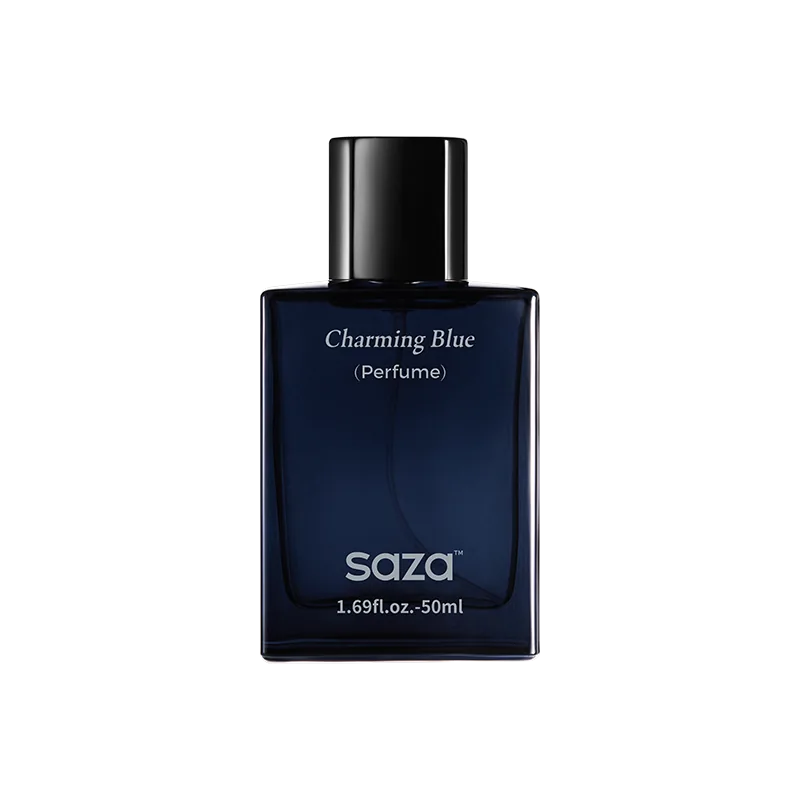 Charming Blue Eau de Toilette 50mlView on sazalab.com →
Final Framework To Pick The Right Work Fragrance For You
Before you add any new work fragrance to your cart, run through this short three-step check to make sure it fits your exact needs, no matter what type of job you have:
- First, confirm your work environment’s rules and unspoken norms. If you work in a small shared office, or have formal fragrance-free policies, prioritize the most subtle options you can find. If you work in a large industrial space with no scent restrictions, you can safely pick something with more presence.
- Second, read community reviews specifically from people who have the same type of job as you. A glowing review from someone who wears a scent to a desk job does not mean it will hold up through a full manual labor shift, and a recommendation from a factory worker will almost certainly be too strong for a quiet meeting room.
- Third, test the scent on a day off before you wear it to work for a full shift. Wear it while you run errands, move around, and go about your normal routine, and check in with yourself after a while to see how it smells on your skin. This will help you avoid any unpleasant surprises on your first day wearing it to the office or jobsite.
At the end of the day, there is no single “best” work fragrance that works for everyone. The right pick is the one that fits your space, your routine, and the people you share a shift with, no matter what the top-ranking generic listicles tell you.
Related reading
 By OccasionBest Winter Fragrances for Men: Warm, Dense, and Not Overpowering Non-Sweet PicksWe break down community-vetted non-sweet winter fragrances for men that work for casual days and formal events, no cloying sweetness or overwhelming projection.2026-09-20 · 7 min read
- By OccasionClub Fragrances: Picks That Cut Through Crowded Bar Air (Plus Budget Clones)We break down community-vetted club fragrances that hold up in packed, stuffy venues, plus low-cost clone picks that match high-end performance for night outs.2026-10-02 · 7 min read
- By OccasionDaily Wear Fragrances: Low-Fatigue Picks You Won’t Tire Of (Including Cross-Gender Gems)We break down community-vetted low-fatigue daily wear fragrances, including underrated opposite-gender picks most mainstream men’s fragrance guides never flag for2026-10-03 · 7 min read
- By OccasionCold Weather Fragrance: A Practical No-Fluff Guide For MenWe break down the real community debate over cold weather scents, plus actionable checks for US male fragrance shoppers this winter.2026-10-04 · 6 min read