Office-Safe Fragrances: How to Be Noticed Without Being Remembered
We break down real office fragrance norms, resolve the community debate on acceptable projection, and flag overhyped scents that will annoy your coworkers.
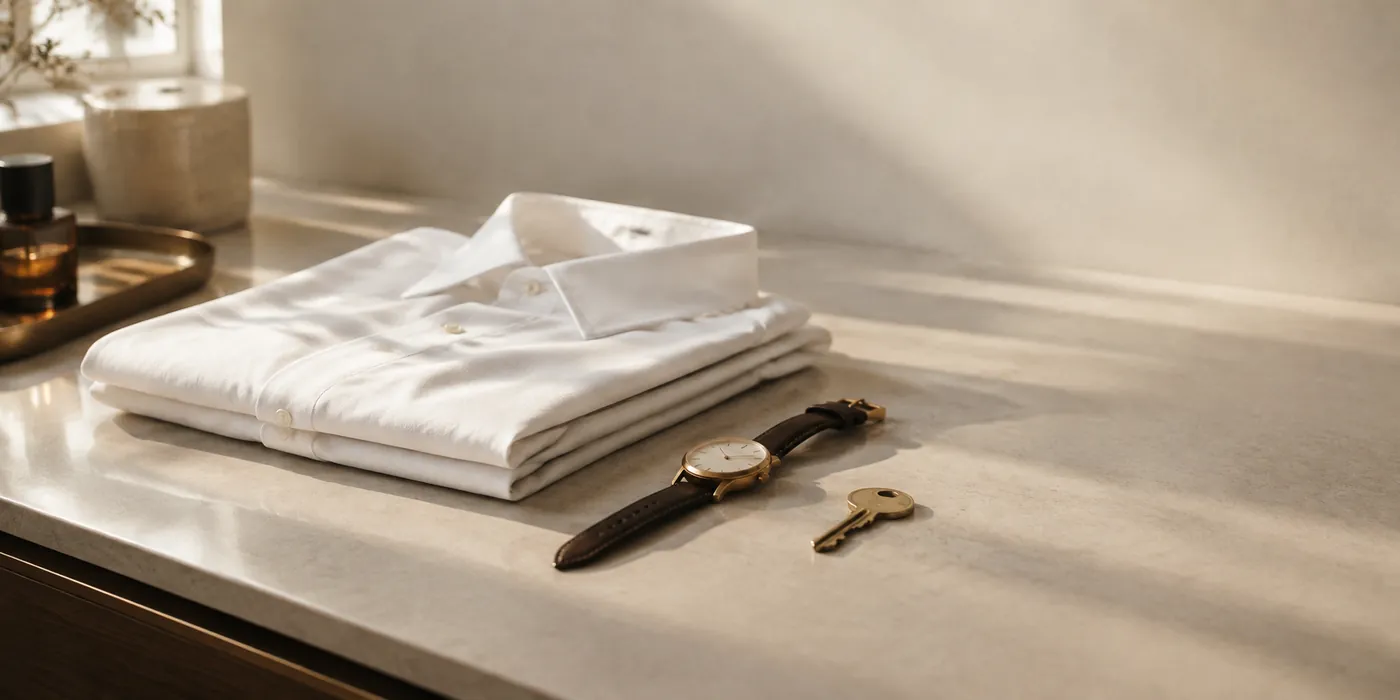
Most generic office fragrance guides get the line between pleasant and distracting wrong. The only truly low-fuss office scents stay within a very tight sillage threshold that avoids bothering coworkers across cubicle walls. You don’t need to wear no scent at all to pull off a polished, unobtrusive signature for work.
Some links on this page may earn us a commission. It does not affect which products we recommend or how we rank them.
If you have ever sat in an open-plan office and caught a whiff of someone’s heavy, spicy cologne drifting over the top of your cubicle wall three rows away, you already know why picking the right office safe fragrance for men is not a trivial call. A bad work scent does not just make you the subject of quiet group chat jokes — it can trigger unspoken sensitivities, make meetings awkward, and leave a negative impression on coworkers who never even say a word to you about it.
But for most people, the goal is not to wear no scent at all. You want a fragrance that feels intentional, that people who are close to you (a manager leaning in to look at your screen, a teammate stopping by your desk to hand you a document) will pick up on as a nice, polished detail, without anyone three feet away noticing you are wearing anything at all. That is the sweet spot: noticed by the people you interact with directly, not remembered by everyone else in the building.
The problem is that almost every generic office fragrance guide you will find online skips over the core, unresolvable debate that splits fragrance communities entirely, and pushes you toward scents that will absolutely cross the line for a lot of your coworkers.
The Unspoken Office Fragrance Fight No One Talks About
There is no universal, widely agreed-upon rule for how much fragrance is acceptable for work, and that is why so many people end up making a bad purchase. The two camps in the fragrance community do not just disagree on minor details — they operate from entirely different baseline assumptions about what office spaces are for.
The first camp takes a more relaxed stance: they argue that any scent that stays within arm’s length of your body is totally fine. They point out that most people wear some kind of scented product, from laundry detergent to deodorant to hand lotion, and expecting someone to wear a completely undetectable cologne is an unreasonable ask. For people in this group, a light, pleasant scent that someone sitting next to you can pick up on is a nice, approachable detail, not a distraction. They often cite their own past workplaces where casual, lightly scented environments were the norm, and no one ever had a problem.
The second camp takes a far stricter position: they say that any fragrance that travels further than 6 inches from your skin is too much for a shared office. People in this group point out that most US workplaces do not have explicit fragrance policies, which means many coworkers who have scent-triggered migraines, asthma, or severe allergies will never tell you your cologne is making them sick. They will just leave the meeting early, take more unplanned breaks, or avoid sitting next to you in team settings, and you will never know why. For this camp, the only truly office-safe scents are the ones you have to lean in very close to even pick up on at all.
This split is not going to be resolved any time soon, because both sides are drawing from real, lived experiences in different workplaces. But if you are buying a new fragrance for work right now, and you do not know exactly what your specific team’s unspoken norms are, erring on the side of the stricter 6-inch rule is almost always the smarter call. It is the choice that will never accidentally alienate a coworker you did not know had sensitivities, and it still lets you wear a signature scent that feels like you, rather than wearing nothing at all.
The Exact Projection Thresholds For Shared Open-Plan Offices
To turn that 6-inch rule into something you can actually use to evaluate fragrances before you buy, you can break down the three clear tiers of sillage that matter for office use:
First, the safe zone: Scent never travels more than 6 inches from your skin. You can smell it when you put your nose to the spot you sprayed it, and someone who is standing very close to you, talking directly to you, will pick up a soft, subtle whiff. No one sitting across the desk from you, let alone in the next cubicle, will detect it unless they are actively trying to. This is the zone that works for every possible office, from tiny shared co-working spaces to huge open floor plans with hundreds of desks.
Second, the conditional zone: Scent travels to arm’s length. Someone sitting next to you in a meeting will smell it clearly, and someone two desks over might pick up a faint hint if they are paying attention. This is fine only if you know for a fact that your workplace has very casual, relaxed scent norms, and no one on your team has any known sensitivities. If you are new to a job, or you do not know your coworkers that well yet, this zone is a gamble.
Third, the never-okay zone: Scent travels past arm’s length, drifting across cubicle walls or down hallways. No matter how nice the fragrance smells, no matter how many positive reviews it has, this level of projection is never appropriate for a standard office. It will annoy at least a few people, and you will never get the full context for why, because almost no one will tell you directly.
The biggest mistake generic office fragrance guides make is that they ignore these tiers entirely, and recommend heavily spiced, high-projection scents that fall firmly in the conditional or never-okay zones, just because those scents are not explicitly "heavy" or "gourmand" or "smoky". A lot of those highly rated spicy fragrances that get labeled as "office friendly" on random listicles have enough sillage to drift across a whole conference room after a single spray, and no one who wrote those lists seems to have tested how they actually perform in a real shared work space.
The Red Flag Scents Generic Office Guides Always Get Wrong
If you have spent any time searching for the best cologne for the office, you have almost certainly seen a handful of popular, widely recommended spicy scents pop up on every list, even though they are terrible picks for most open-plan offices. These are scents that smell incredible on their own, and work great for date nights, weekend outings, or casual events, but they have a sharp, noticeable spicy edge that carries far further than most people realize.
A lot of these scents are built around strong cardamom, black pepper, or cinnamon top notes that cut through air far more easily than softer notes like citrus, lavender, or clean musk. Even if the rest of the scent profile is warm and smooth, that sharp top note will travel across a room far faster than you expect, and leave people three seats away from you picking up on a strong spicy scent they did not ask to smell.
The worst part is that a lot of these scents are marketed as "professional" or "work appropriate" because they do not have any of the obvious loud notes like heavy vanilla, thick oud, or strong tobacco that everyone knows to avoid. But their unbalanced spicy top makes them far more distracting than a soft, mild clean musk that lingers very close to the skin, even if that musk is technically less "complex" or less highly rated in fragrance communities.
You do not have to avoid all spicy notes entirely to wear a good office fragrance. But if a scent leads with a sharp, prominent spicy note that hits you immediately when you first spray it, that is a red flag that it will carry too far for most shared workspaces. The best office scents have soft, rounded top notes that never cut through the air sharply, and sit close to the skin for their entire wear time.
How To Vet A New Office Fragrance Before You Commit
Since so many generic lists push bad picks, you can use this simple, community-vetted framework to test any fragrance you are considering, to make sure it actually fits your office’s needs:
First, skip the blind buy rush for bold, highly praised new releases. One of the most consistent patterns from fragrance community discussions is that people who blindly buy a popular hyped scent almost always end up disappointed when they wear it to work, because its projection is far stronger than they expected. Sticking to a known, low-risk safe pick that plenty of other people have already worn to the office is almost always a better call than gambling on a new, untested release that you have only seen reviewed online.
Second, look for user feedback that specifically mentions office wear, not just "everyday wear". A lot of fragrances that are labeled as great for everyday use are intended for casual weekends, running errands, or hanging out with friends, where higher projection is not a problem. If you cannot find any comments from people who have actually worn the scent to a shared office and confirmed it did not draw any unwanted comments, that is a sign you should keep looking.
Third, test the projection in a low-stakes public space first, before you wear it to a full day of meetings. Spray it once on your chest in the morning, go to a coffee shop or a library, and ask a friend who is sitting across the table from you if they can smell it without leaning in. If they can, it is too strong for a standard open-plan office.
The Community-Approved Office Fragrance Sweet Spot
Across all community discussions about non-offensive everyday work scents, there is a clear consensus on what the ideal office fragrance delivers. It is a scent that feels intentional and polished, not generic or boring, but never loud, never sharp, and never draws unwanted attention. One of the most widely praised picks that hits this exact sweet spot is an accessible clone fragrance that users consistently name as perfect for all-day office wear, with no risk of bothering anyone around you. It has a smooth, well-balanced profile that never cuts through the air sharply, and stays close to the skin for its entire wear time, fitting firmly in the safe 6-inch zone.
At the end of the day, the goal of an office fragrance is not to impress everyone you meet. It is to add a small, nice personal detail to your daily routine, without creating any unnecessary friction with the people you work with. If you stick to the tight low-projection threshold, avoid the overhyped spicy scents that generic lists incorrectly recommend, and prioritize scents that other office workers have already vetted for shared spaces, you will end up with a signature work scent that works for you, and never annoys anyone else.
Related reading
 By OccasionFragrance for Hot, Humid Weather: Why Most Fresh Scents FailWe break down why most popular fresh summer fragrances fall apart in sweltering, humid conditions, and share underdiscussed picks that actually hold up when you2026-09-20 · 7 min read
 By OccasionBest Winter Fragrances for Men: Warm, Dense, and Not Overpowering Non-Sweet PicksWe break down community-vetted non-sweet winter fragrances for men that work for casual days and formal events, no cloying sweetness or overwhelming projection.2026-09-20 · 7 min read
 By OccasionEveryday Fragrances for Men: The Case for One Reliable BottleWe break down the community debate over men’s everyday colognes, compare value of single bottles vs small collections, and help you pick your no-fuss daily scent.2026-09-20 · 8 min read
 By OccasionFall Fragrances for Men: What Works Before Winter ArrivesWe break down the two most debated under-the-radar men’s fall designer fragrances, plus guidance to pick the right one for cool, not-yet-freezing autumn days.2026-09-20 · 7 min read