How to Test Cologne Before Buying: A Method That Actually Predicts Wear
Skip useless test strips and bad blind buys. This guide walks through community-backed methods to test cologne before you pay for a full bottle.
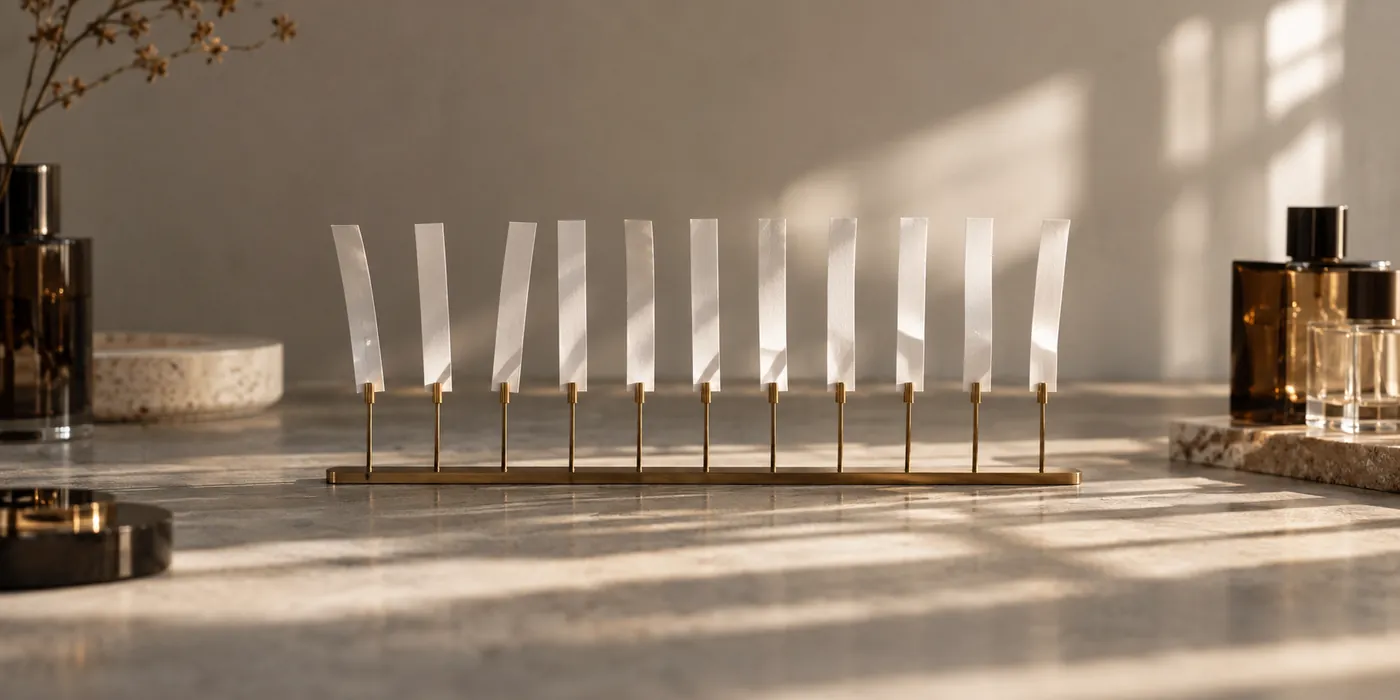
Standard advice to sniff test strips at the perfume counter almost never tells you how a cologne will actually wear on your skin through a full day. The method laid out here prioritizes low-stakes sample testing first, so you never waste money on a full bottle that smells nothing like you expected. You don’t need to guess based on hype or viral recommendations to find a scent you actually enjoy wearing regularly.
Some links on this page may earn us a commission. It does not affect which products we recommend or how we rank them.
If you’ve ever walked out of a department store excited about a new cologne, only to realize a few hours later that the scent you loved at the counter smells completely different on your skin, you already know the core problem with standard fragrance testing advice. Most guides will tell you to spritz a test strip, sniff a few options, and pick the one that catches your eye — but that method leaves a huge share of people stuck with full bottles they never reach for after the first week.
This guide skips all the generic, unhelpful advice you’ve seen before, and lays out a step-by-step, community-vetted method that works for both in-person and online shopping, so you never waste money on a scent that doesn’t fit your daily routine.
The Core Problem With All The Common Bad Testing Methods
The disagreement in fragrance communities about testing methods doesn’t come from nowhere. For years, people have been relying on quick, low-effort checks that only give you a tiny sliver of information about a scent, and then acting surprised when the full experience doesn’t line up.
We’ve broken down the most popular testing shortcuts, and what they actually tell you (and what they don’t) in the table below:
| Testing Method | What It Tells You | Big Limitation |
|---|---|---|
| Paper test strip | What the very first top notes of the scent smell like, completely separate from skin chemistry | Does not interact with your natural oils at all, and will never show you how the scent evolves as it dries down |
| Sniffing directly from the bottle | The concentrated, un-aerated version of the scent that never touches your skin or mixes with air | Smells far stronger and more sharp than it will when you spray it on yourself, and hides all the softer later stages of the fragrance |
| One quick spritz on your wrist at the counter, then smelling it 2 minutes later | The immediate opening of the scent on your skin, before it has time to settle | Your nose is still fatigued from sniffing other bottles nearby, and you have no idea how it will smell after you leave the store |
| Reading viral social media reviews of the scent | What the scent smelled like to one other person, on their skin, in their specific context | Hype around a viral scent often overstates positive traits and ignores common complaints that would matter to your use case |
None of these methods are inherently bad as a very first screening step, but using any one of them as your only check before buying a full bottle is the exact behavior that leads to the piles of unused cologne bottles many people accumulate after a few years of collecting. The goal of a good testing process is to move through these low-information checks first, then build up to a full, realistic wear test that matches how you will actually use the cologne if you buy it.
Step 1: The In-Store Test That Actually Gives You Useful, Actionable Data
If you are shopping in person, skip the test strips entirely. They are a useless middleman that adds no value to your process.
Instead, come to the fragrance counter with completely clean, unscented skin on your forearms — no scented lotion, no body wash with heavy perfume, no leftover deodorant that will rub off on the area you plan to test. Pick a maximum of three scents you want to try that day, any more than that and your nose will get fatigued to the point you can no longer tell the difference between them.
Spritz one scent on the inside of your left forearm, and a second on the inside of your right forearm. Do not rub them together — that crushes the delicate scent molecules and changes how the fragrance evolves over time. Then, walk away from the fragrance counter entirely. Go get a coffee, walk around the mall, run a few errands, and don’t sniff the scents constantly. Come back to them after 20 minutes, then after an hour, to see how they have developed past the sharp opening you smelled at the counter.
This does two critical things that the test strip trick never does: first, it lets the scent interact with your unique skin chemistry right away, so you can see if any notes turn sour or sharp on you specifically. Second, it lets you experience the scent in a normal, public context, so you can get a sense of how strong it is when you are out and around other people, not just when you are holding your arm directly up to your nose.
If you like how the scent smells after an hour of wearing it out, that is a good sign — but it is still not enough information to buy a full bottle. This in-store test only tells you that the mid-stage of the fragrance works for you. You still have no idea how it will smell many hours later, after you have been active, sweated a little, or spent time outside in different temperatures. That is where the second, at-home step comes in.
Step 2: The Online Pre-Test That Cuts Through Hype Before You Spend Any Money
If you can’t make it to a physical store that carries the cologne you are curious about, you can still do a lot of low-effort vetting online before you commit to trying anything. The biggest trap people fall into when researching scents online is buying directly into viral hype, where every post about a new fragrance only talks about the opening notes and how amazing it is, and never mentions the parts that most wearers end up disliking.
When you are researching a scent online, ignore all the top-line 10-second reviews that only talk about the first impression. Look for descriptions from people who wore the scent for a full day, and talk about how it develops in the later stages. Look for mentions of how it works in different contexts — if someone wore it to a long work day, to a date, to a casual outdoor event, and what they thought of it after several hours of wear.
This will immediately filter out the scents that sound perfect in short clips, but fall apart completely an hour after you spray them. If almost every long-form user review mentions a specific note that you know you hate, you can cross that scent off your list entirely without ever spending a cent on a sample.
Step 3: The At-Home Test That Predicts Full-Day Wear
Once you have narrowed your list down to a small set of scents that passed your in-store or online pre-test, the next step is to get small samples of each one. This is the step that almost every guide skips, and it is the single most effective way to avoid bad blind buys entirely.
Many users in fragrance communities point out that getting a small sample to test at home is a tiny, low-stakes cost that saves you from wasting far more money on a full bottle you will never use. When you get the sample, do not spray it on and sniff it once while you are sitting on your couch. Treat it exactly like you would treat a full bottle you just bought.
Spray it on your clean skin at the very start of your day, before you get dressed, before you put on any other scented products. Wear it through your normal routine: go to work, run errands, meet up with friends, work out if that is part of your usual day. Check in with the scent periodically through the day to see how it evolves, how it mixes with your natural body scent, how it reacts to heat or sweat, and whether you still enjoy it many hours after you first sprayed it.
This is the only test that will ever give you a completely accurate picture of what it is like to own and wear that cologne on a regular basis. You will notice things you never would have picked up on in a 10 minute trip to the department store: maybe the scent that smelled fresh and bright at the counter gets cloying and heavy after a few hours, maybe it fades completely when you are outside in the cold, maybe you catch a whiff of it on your shirt at the end of the day and realize you love it far more than you expected.
Final Check Before You Buy The Full Bottle
Once you have worn the sample through one full day, wear it a second time on a different kind of day. If you first tested it on a casual weekend, wear it to a busy work day. If you first tested it on a warm day, wear it on a cooler day. This makes sure the scent works for the full range of contexts you will actually use it in, and that you did not just get a lucky wear where the temperature or your skin chemistry was acting unusually.
If after two full days of wearing the sample you still reach for it voluntarily, and never find yourself annoyed or turned off by how it smells at any point in the day, that is the right time to buy the full bottle. This method takes a little more time than grabbing a bottle off the shelf on a whim, but it eliminates almost all the risk of ending up with a cologne you never want to wear. There is no reason to ever make a blind buy again, when this simple, low-effort process works so reliably to find scents that fit your exact preferences.
Related reading
 Avoiding Bad BuysFragrances With Low Projection for People Who Dislike Being NoticedSkip overbearing, room-filling scents. This guide helps you find subtle colognes that won’t draw unwanted office or public attention, no guesswork required.2026-09-20 · 8 min read
 Scent ProfilesWhy Cologne Smells Different on Skin Than on Test Paper (And Fabric, Too)Find out why cologne smells different on your skin than on test paper or fabric, how alcohol top notes skew first impressions, and how to pick a scent you’ll love2026-09-20 · 8 min read
 Avoiding Bad BuysWhy the Same Cologne Smells Different on You Than on Someone ElseSkip the generic skin pH takes. We break down every common unexpected cologne scent issue so you stop wasting money on mismatched fragrances.2026-09-20 · 7 min read
 Avoiding Bad BuysColognes That Are Less Likely to Trigger Headaches For Sensitive WearersWe break down the debate over what causes fragrance-related headaches, and share a clear framework to find colognes that work for your unique sensitivities.2026-09-20 · 8 min read