Bleu de Chanel vs Dior Sauvage: Which Fits Which Person
No generic universal winner here. We map Bleu de Chanel and Dior Sauvage to your exact daily wear contexts, based on real community debates from fragrance spaces.
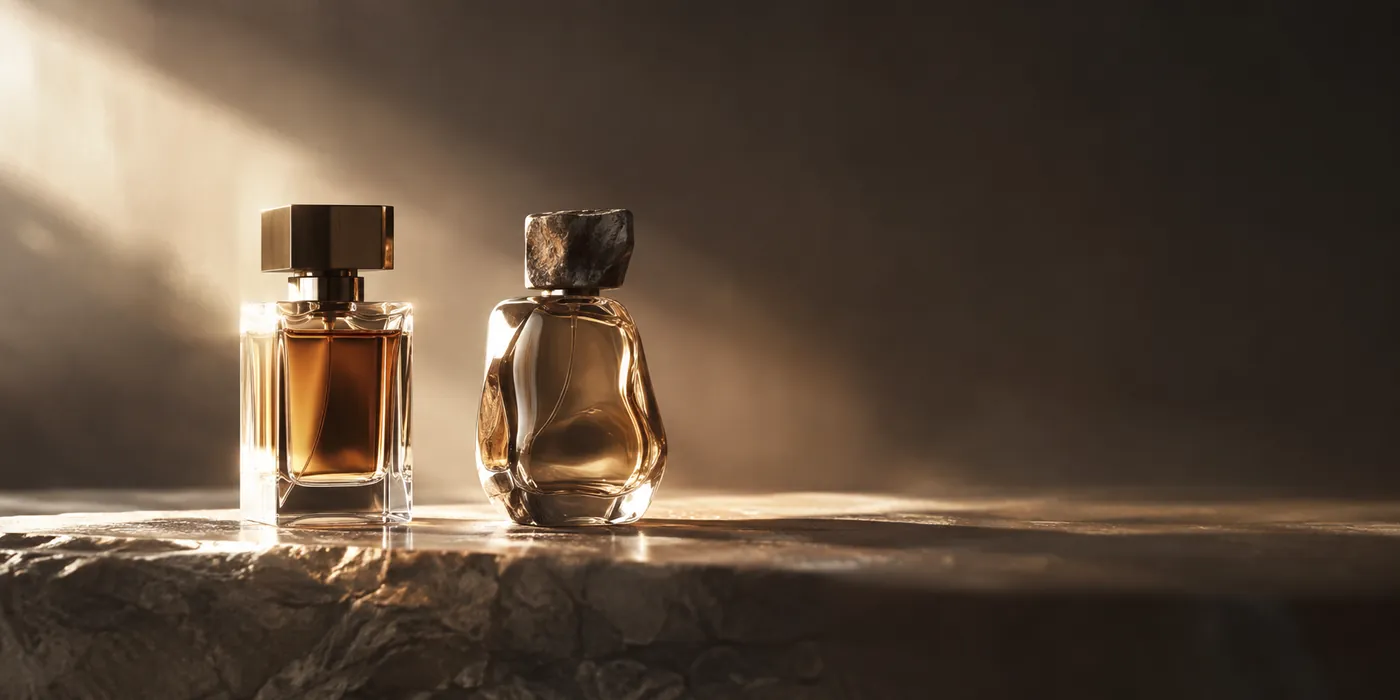
There is no single universally better pick between Bleu de Chanel and Dior Sauvage, the two most iconic mass-market men’s fragrances of the last 30 years. The right choice depends entirely on the specific settings you frequent most and the vibe you want to project to people around you. This comparison skips the hot takes and breaks down the actual community split on performance and versatility to help you avoid a purchase you’ll regret.
Some links on this page may earn us a commission. It does not affect which products we recommend or how we rank them.
If you’re researching this comparison right now, you’ve almost certainly already seen a dozen generic guides that declare one of these two iconic fragrances the clear “winner” for every single person. Those guides ignore the very real, years-long community debate that has never been resolved for a simple reason: there is no universal winner. The split over which scent performs better and works for more settings is not a sign that half the community is wrong — it’s a sign that the two fragrances are built for very different daily use cases that most reviews never clearly outline.
This comparison is built entirely on what regular fragrance users across public communities actually argue about, no paid talking points, no fake test results, no arbitrary scoring. We’re not here to tell you one is objectively better. We’re here to map each scent to the exact set of routines, social settings, and personal preferences that make it the right pick for you.
The Core Community Disagreement No Generic Guide Tells You About
The entire years-long debate between fans of Bleu de Chanel and Dior Sauvage boils down to two unresolvable points of friction. First, there is no broad agreement on which of the two has better projection and sillage for the average wearer. People who swear one is far more noticeable almost always have personal body chemistry that amplifies that specific scent’s top notes, while people who say the opposite have chemistry that mutes it. Second, there is no consensus on which of the two is more versatile across all social settings. A user who works a casual outdoor job will have a wildly different experience of versatility than a user who works in a strict corporate office, and both will walk away from the comparison with completely opposing takes.
This is why scrolling through thread after thread about this exact comparison will leave you more confused than when you started. Every top-voted comment insisting one is clearly superior is written by a person whose daily life and skin chemistry do not match yours. The only way to cut through the noise is to stop asking “which is better” and start asking “which one matches the life I actually live every day.”
Side By Side Context Comparison
We pulled the most commonly cited traits associated with both scents from community discussions to lay out exactly what you can expect, no arbitrary performance numbers included.
| Trait | Bleu de Chanel | Dior Sauvage |
|---|---|---|
| Core public vibe | Polished, understated, put-together, unaggressive | Bold, outgoing, casual, adventurous |
| Immediate note profile | Smooth, woody aromatic, soft citrus top | Bright, fresh spicy, prominent amber and mineral top |
| Default social signal people pick up on | You pay attention to small details, you respect professional boundaries | You are low-fuss, you enjoy spending time outside |
| Common variant focus | Eau de Parfum and Parfum formulations that lean deeper into smooth wood | Elixir and Parfum formulations that amp up the bright, juicy opening |
| Common clone community talking point | Alternatives that match the soft, non-overpowering dry down | Alternatives that match the strong opening projection without the synthetic edge some users complain about |
When Bleu de Chanel Is The Clear Better Pick
Bleu de Chanel is the far stronger choice if most of your week is spent in professional, indoor settings. It is the default pick for people who work in corporate offices, client-facing roles, or any space where you don’t want your fragrance to draw unwanted attention from coworkers who might find a loud scent distracting. The soft, gradual dry down reads as intentional and polished, not like you oversprayed before leaving the house. It also works extremely well for low-key formal events, from work dinners to family gatherings, where you want to smell like you made an effort without standing out for the wrong reasons.
A lot of users in community discussions note that Bleu de Chanel is the safer pick if you regularly share space with people who don’t wear fragrance at all. It rarely gets called out as overwhelming, and the majority of people who don’t follow fragrance at all will describe it simply as “a nice, clean, professional scent” rather than something loud or polarizing. It’s also a great pick if you prefer to wear one single fragrance for almost all your activities, and you don’t want to have to swap scents between your work shift and a post-work dinner with friends.
The biggest caveat for Bleu de Chanel is that it can feel too muted for people who spend most of their time outside, or who regularly go to loud, crowded spaces where softer scents get lost entirely. If you’re used to wearing fragrances that you can easily smell on yourself all day, you might find that Bleu de Chanel disappears too quickly for your preference in those high-airflow environments.
When Dior Sauvage Is The Clear Better Pick
Dior Sauvage is the far stronger choice if most of your week is spent in casual, outdoor, or high-energy settings. It is the default pick for people who spend a lot of time hiking, going to weekend cookouts, driving with the windows down, or meeting up for casual dates in busy public spaces. The brighter, more forward opening cuts through open air and crowded rooms far better than softer scents, and it reads as laid back and approachable rather than stuffy or overly formal.
Community discussions also note that Dior Sauvage is the more popular pick for younger wearers who are building their first fragrance collection and want a single bottle that works for all their casual social plans. It has a very broad, cross-demographic appeal that rarely reads as pretentious, and people who don’t know anything about fragrance will almost always describe it as a fresh, easy-to-like scent. It’s also a great pick if you regularly wear fragrance in warmer weather, where heavier woody scents can feel cloying or heavy on the skin.
The biggest caveat for Dior Sauvage is that it can easily read as too loud for more formal professional settings. If you work in a quiet office space with shared cubicles, overspraying Dior Sauvage is a common way to get side-eye from coworkers who can smell it across the room. It’s also a worse pick for people who want a scent that feels unique, because its massive mainstream popularity means it’s extremely likely you’ll smell it on other people at any large public gathering you attend.
The Edge Cases Most Comparisons Skip
If you’ve been searching through long-tail queries about this comparison, you’ve probably noticed that most people aren’t just asking about the original standard releases — they’re asking about the EDP vs EDP, elixir, and Parfum variants of both scents. The active clone community around both fragrances makes it clear why that is: a lot of wearers find that the standard designer releases don’t hit the exact performance profile they want for their skin, so they’re testing different variants and alternatives to get the exact balance of projection and softness that works for them.
If you’re specifically looking at the EDP formulations of both scents, the core vibe difference stays the same: Bleu de Chanel EDP leans deeper into smooth sandalwood, while Dior Sauvage EDP leans deeper into rich amber. If you’re looking at the newer elixir variants, the gap gets even wider: Bleu de Chanel Elixir adds more warm, spicy labdanum that makes it feel even more formal and polished, while Dior Sauvage Elixir cranks up the bright juicy bergamot and mineral notes that make it feel even more outgoing and casual.
A lot of users also ask how these two stack up against other popular designer staples like Acqua di Gio or YSL Y, and the same rule applies: none of these are objectively better, they’re just mapped to different contexts. If you’re choosing between Bleu de Chanel, Dior Sauvage, and a third popular fragrance, you can use the same context framework we laid out here to match the scent to your daily routine, rather than picking the one that gets the most upvotes on a random thread.
How To Pick The Right One For You
Since the community debate will never be resolved for everyone, the only reliable way to make your choice is to test both scents against your actual life, not against random online takes. First, get a sample of each, and wear one to a full normal work day, then wear the other to a full normal weekend day. Pay attention to how you feel wearing it in each space, not just how it smells on your skin in the store. Second, ask a friend or coworker who doesn’t wear fragrance what they think of the scent after you’ve been around them for a few hours. Their unfiltered reaction will tell you far more about how the scent lands on other people than any top-rated reddit comment. Third, don’t default to the more popular one just because you see it mentioned more often. The most popular scent in your friend group might be the worst possible fit for the exact daily contexts you spend most of your time in.
At the end of the day, both Bleu de Chanel and Dior Sauvage are iconic for a reason. They’re two of the most well-made, widely accessible mass market men’s fragrances of the last 30 years, and neither one is a bad purchase. The only wrong choice is picking the one that was written for a life you don’t actually live.
Related reading
 Brand ComparisonsDior Sauvage vs Versace Eros: Two Very Different Kinds of LoudWe break down every major Dior Sauvage and Versace Eros variant, cover the ongoing community debate, and help you pick the right bottle for your use case.2026-09-20 · 7 min read
 Brand ComparisonsArmaf Fragrances: Where the Value Actually IsWe break down conflicting user reviews for top Armaf scents to separate the releases that deliver on value from the letdowns other buying guides ignore.2026-09-20 · 8 min read
 Brand ComparisonsLattafa Fragrances: What Is Worth Buying and What Is NotCut through viral hype for Lattafa fragrances: separate overrated mainstream picks from underrated sleepers using real long-term user feedback from the fragrance2026-09-20 · 7 min read
 Brand ComparisonsNiche Fragrance for Beginners: Where to Start Without RegretWe break down if niche fragrances are worth the premium, skip overly complex hobbyist picks, and give a clear framework for first-time buyers coming from mass2026-09-20 · 7 min read